

MAKE A SPLASH
THIS SUMMER

Join Now For $0 Enrollment!
Learn MoreIf you want to build strength and improve your overall fitness, your back workouts shouldn’t be overlooked. The muscles in your back play a key role in upper body strength, posture, and injury prevention, making them essential for anyone following a consistent strength training or weight training program. Prioritizing back training can also help improve lifting performance and support better movement throughout your workouts.
Effective back workouts target several important muscle groups, including the latissimus dorsi, erector spinae, and mid-back muscles. Training these areas through resistance training and pulling exercises helps promote muscle hypertrophy, strength gains, and improved stability. Members looking to accelerate results can also explore CAC’s muscle building programs.
In this guide, we’ll break down some of the best back exercises at the gym, explain how heavy you should lift, and share tips for building muscle safely and effectively.
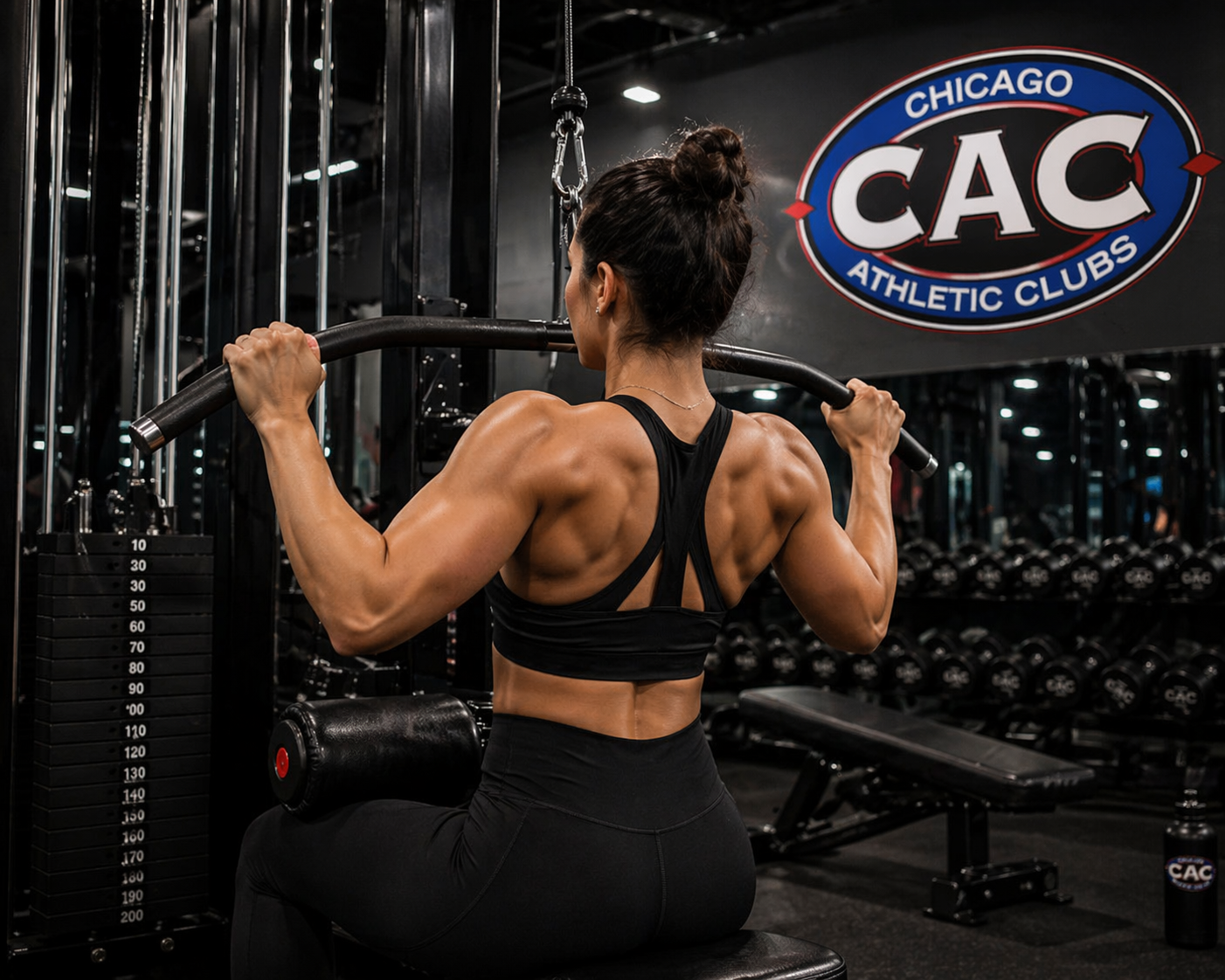
Your back contains several major muscle groups responsible for stabilizing your spine and improving athletic performance. Strong back muscles help maintain a neutral spine, reduce excessive strain on joints, and support movements like the bench press, push-ups, and pull-ups.
A well-structured back workout typically combines several training methods, including:
Many strength workouts for athletes prioritize back training because it improves core strength, bone density, cardiovascular endurance, and overall physical performance.
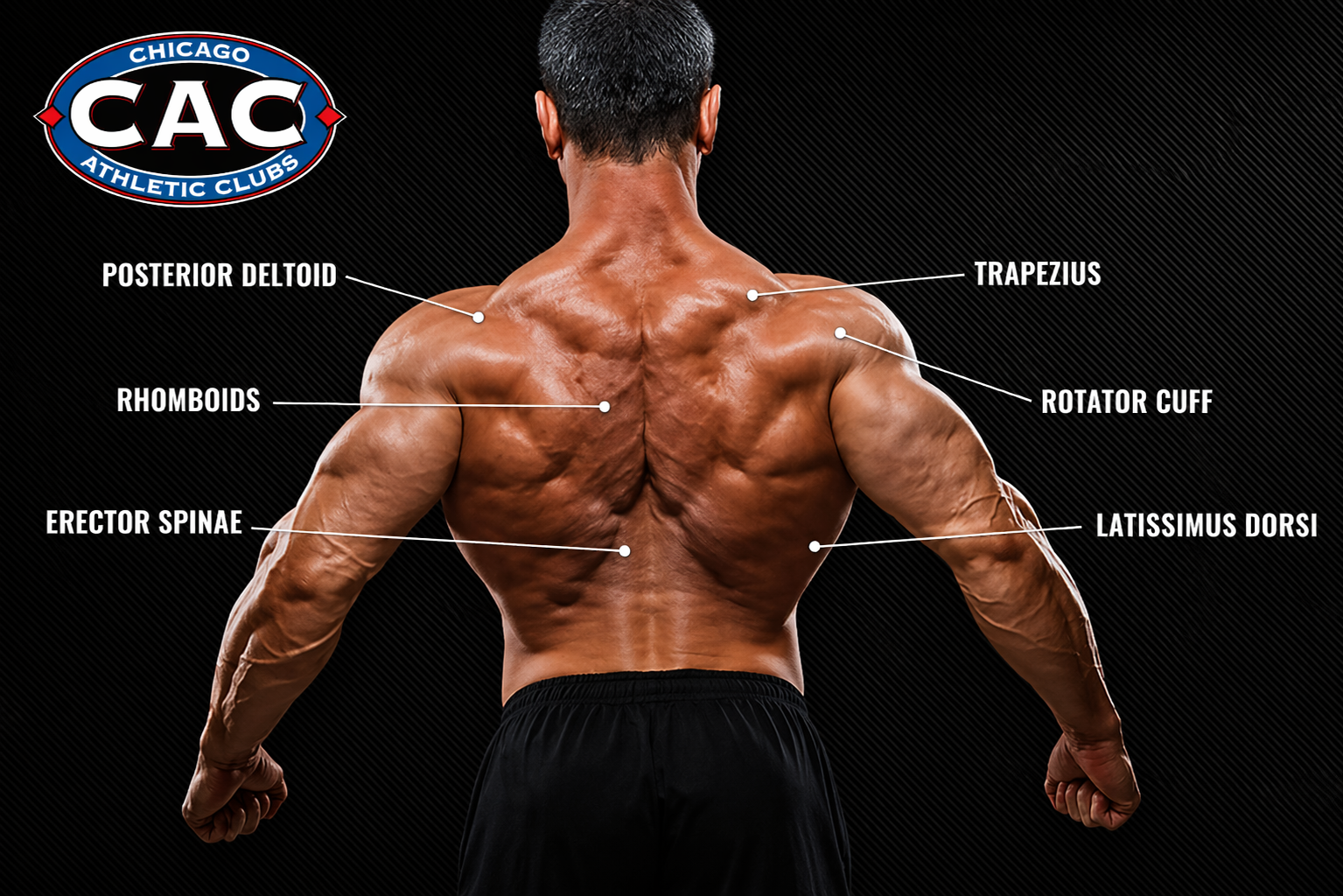
Effective back workouts gym routines focus on strengthening these primary muscles:
Training these key muscles improves posture, prevents muscular imbalances, and supports stronger compound movements.
One of the most common questions people ask in the weight room is how much weight they should be lifting during their back workout.
Some lifters use lighter weights and higher reps to improve muscle activation and cardiovascular endurance, while others prefer heavier loads to stimulate muscle hypertrophy and strength gains.
Both approaches can work depending on your training program and experience level. However, when your goal is increasing muscle mass, you’ll eventually need to pursue more heavy lifting.
In strength training and resistance training, heavy lifting typically refers to using weights that are roughly 70–90% of your one-rep max.
At this intensity, your body recruits more muscle fibers, which helps promote muscle growth and strength gains.
Heavy lifting is often used in a strength workout for athletes because it can:
However, lifting heavy weights safely requires proper technique. Maintaining a neutral spine, controlled range of motion, and stable shoulder blades is essential when performing exercises like the bent-over row or dumbbell row.
For beginners, focusing on proper form and the mind-muscle connection should come first before increasing weight through progressive overload.
Working with a personal trainer at Chicago Athletic Clubs can also help you determine appropriate loads and avoid excessive strain or prevent injury.
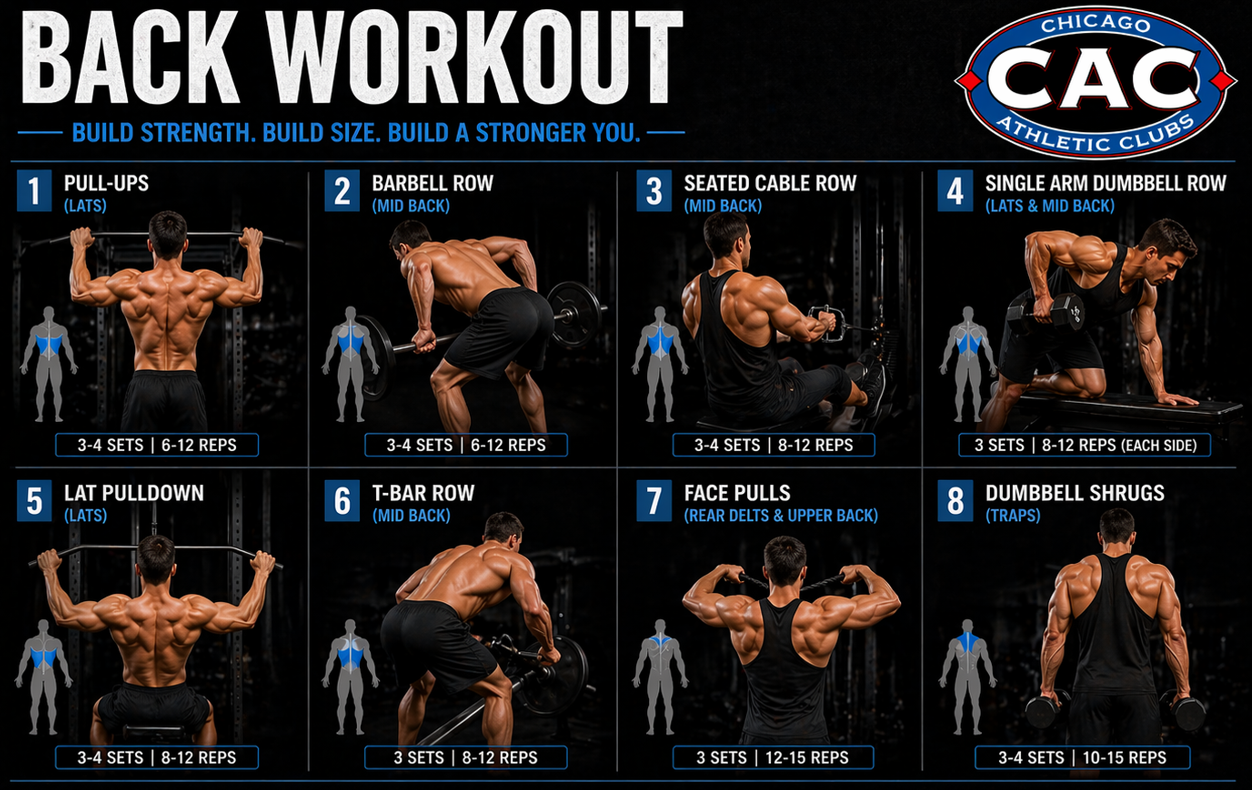
A complete back workout gym routine should combine compound pulling exercises with isolation movements. These exercises target the upper back, mid back, and supporting muscles for balanced development.
Pull-ups are one of the most effective bodyweight exercises for building upper body strength and improving muscle definition in the latissimus dorsi and upper back.
How to Perform Pull Ups
Primary muscles:
Latissimus dorsi, upper back, rear delts, core
Sets and reps:
3–4 sets of 6–10 reps

Pull-ups are a powerful compound exercise that builds strength across multiple muscle groups.
The bent-over row is one of the most effective barbell exercises for building thickness in the mid back.
How to Perform the Bent-Over Row
Muscles worked:
Mid back, erector spinae, rear delts, lats
Sets and reps:
3–4 sets of 8–12 reps
.png?width=1536&height=1024&name=Bent%20Over%20Row%20(Classic%20Barbell%20Exercise).png)
This movement is one of the best compound exercises for building muscle and strength.
The single-arm dumbbell row is one of the best dumbbell back exercises because it helps correct muscle imbalances by training each side independently.
How to Perform the Dumbbell Row
Muscles worked:
Latissimus dorsi, mid back, rear delts
Sets and reps:
3–4 sets of 10–12 reps per side
.png?width=1537&height=1023&name=Single%20Arm%20Dumbbell%20Row%20(Best%20Dumbbell%20Back%20Exercises).png)
These dumbbell exercises help increase muscle activation and improve pulling strength.
Dumbbell shrugs are effective isolation movements that target the trapezius muscles in the upper back.
How to Perform Dumbbell Shrugs
Muscles worked:
Upper back, traps, rear delts
Sets and reps:
3 sets of 12–15 reps
.png?width=1536&height=1024&name=Dumbbell%20Shrugs%20(Upper%20Back%20Isolation%20Exercise).png)
Shrugs increase blood flow to the muscles and improve posture.
To maximize results from your back workouts gym routine, keep these principles in mind. Many new lifters also benefit from small group training, which combines expert coaching with the motivation of a group workout environment.
Maintaining a neutral spine, a slight bend in the knees, and a controlled range of motion helps prevent injury and improve muscle activation.
Gradually increasing training volume or heavy weight is essential for muscle hypertrophy and strength gains.
A balanced routine includes compound movements like rows and pull-ups, along with isolation exercises like dumbbell shrugs.
Muscles grow during recovery. Support your workouts with:
Whether your goal is building muscle, improving strength, or increasing physical performance, the right back workouts gym routine can transform your training results.
At Chicago Athletic Clubs, you’ll find fully equipped weight rooms, free weights, and expert personal trainers who can help design a personalized strength workout for athletes and everyday gym members.
Ready to build a stronger back? Join Chicago Athletic Clubs today and take your strength training to the next level.