

MAKE A SPLASH
THIS SUMMER
Join Now For $0 Enrollment!
Learn MoreWater aerobics offers a unique way to improve strength, endurance, and overall fitness without placing unnecessary stress on your joints. Unlike many land-based workouts, water aerobics exercises use the natural resistance of water to challenge your muscles while buoyancy reduces impact on your knees, hips, and ankles.
Whether you’re beginning your fitness journey, returning after an injury, or looking for a new way to stay active, aquatic workouts provide an effective full-body routine. Water aerobics can help you build strength, improve cardiovascular health, and enjoy exercise in a supportive environment.
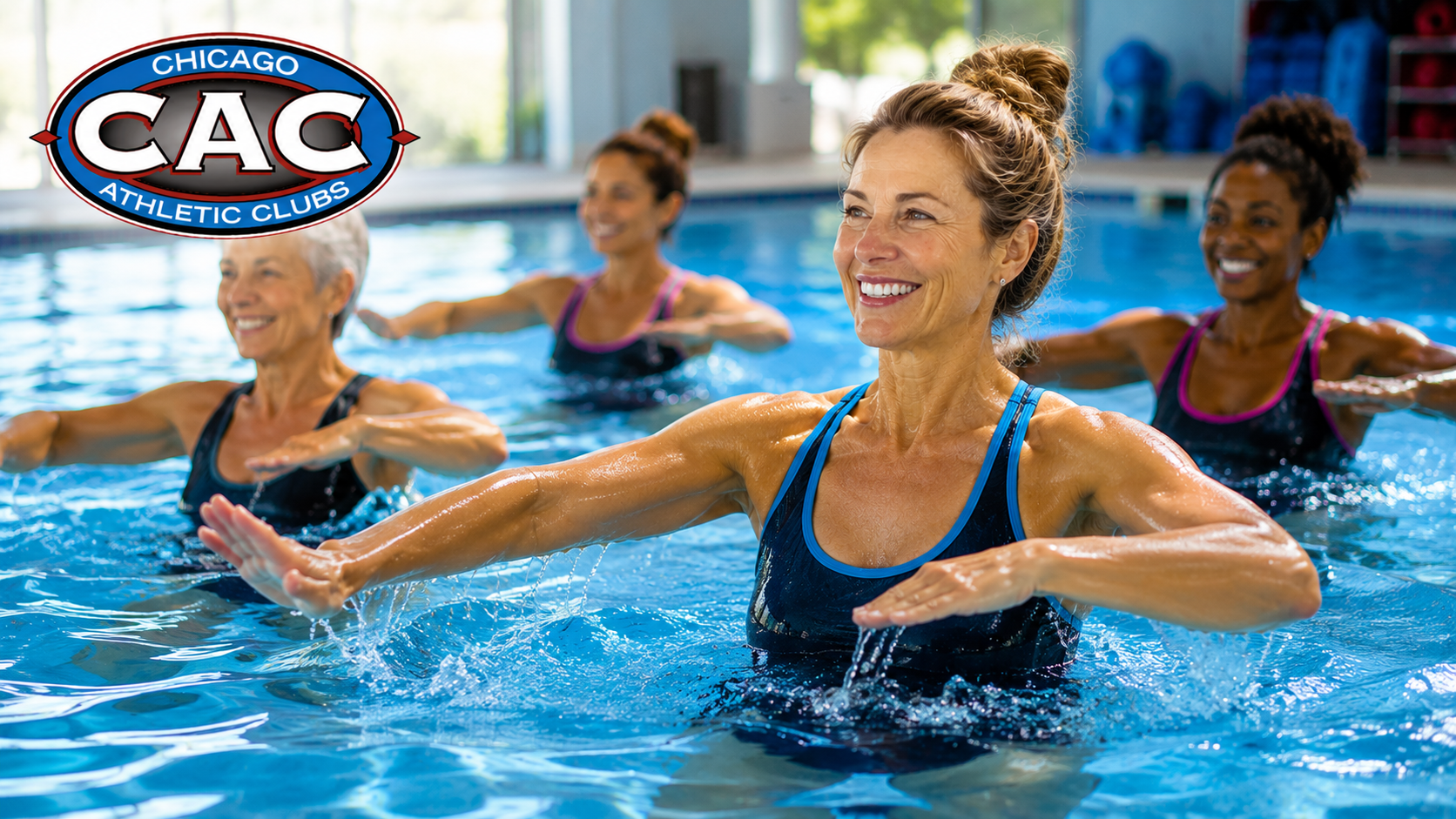
One of the biggest advantages of water aerobics is that every movement works against the resistance of water. This helps strengthen muscles while reducing the strain that high-impact exercises can place on the body.
Water aerobics is an excellent option for:
Aquatic exercise can also improve:
Because water supports much of your body weight, many participants can exercise comfortably for longer periods than they might on land.
Explore aquatic fitness classes at Chicago Athletic Clubs to discover instructor-led workouts designed for every fitness level.
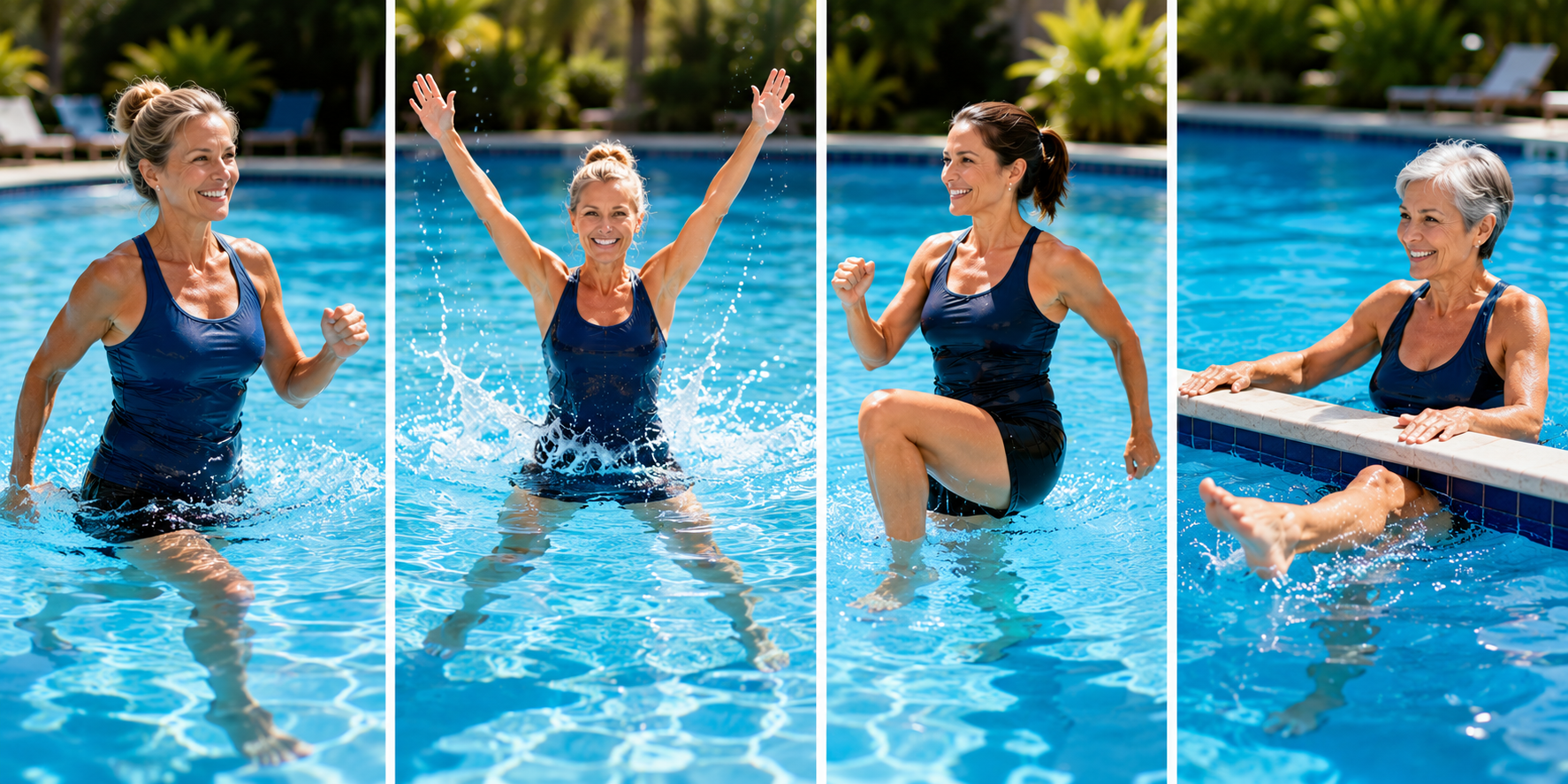
If you’re new to aquatic fitness, start with basic water aerobics exercises that help you become comfortable moving through the water while engaging multiple muscle groups.
Walking through chest- or waist-deep water strengthens your legs while engaging your core for balance. Swing your arms naturally as you move forward and backward to increase your heart rate.
Perform jumping jacks as you would on land, allowing the water to provide resistance during each movement. This exercise targets your shoulders, chest, legs, and cardiovascular system.
Stand tall and lift one knee toward your chest before lowering it with control. Alternate legs while keeping your core engaged to strengthen your hips and abdominal muscles.
Hold onto the pool wall if needed and perform gentle front or side leg kicks. These movements strengthen your glutes, quadriceps, hamstrings, and hips while improving flexibility.
As your fitness improves:
Starting slowly allows your body to adapt while reducing the risk of overexertion.
Find a Chicago Athletic Club near you to discover aquatic fitness classes for beginners and experienced exercisers.
A balanced fitness water aerobics workout should include movements that support cardiovascular health, strength, flexibility, and recovery.
A simple routine might include:
Most adults can benefit from water aerobics two to four times per week, depending on their goals and overall activity level.
Instructor-led classes can also improve consistency and motivation. Certified instructors demonstrate proper technique, introduce new exercises, and create workouts that challenge participants safely.
View group fitness schedules to find aquatic classes that fit your routine.
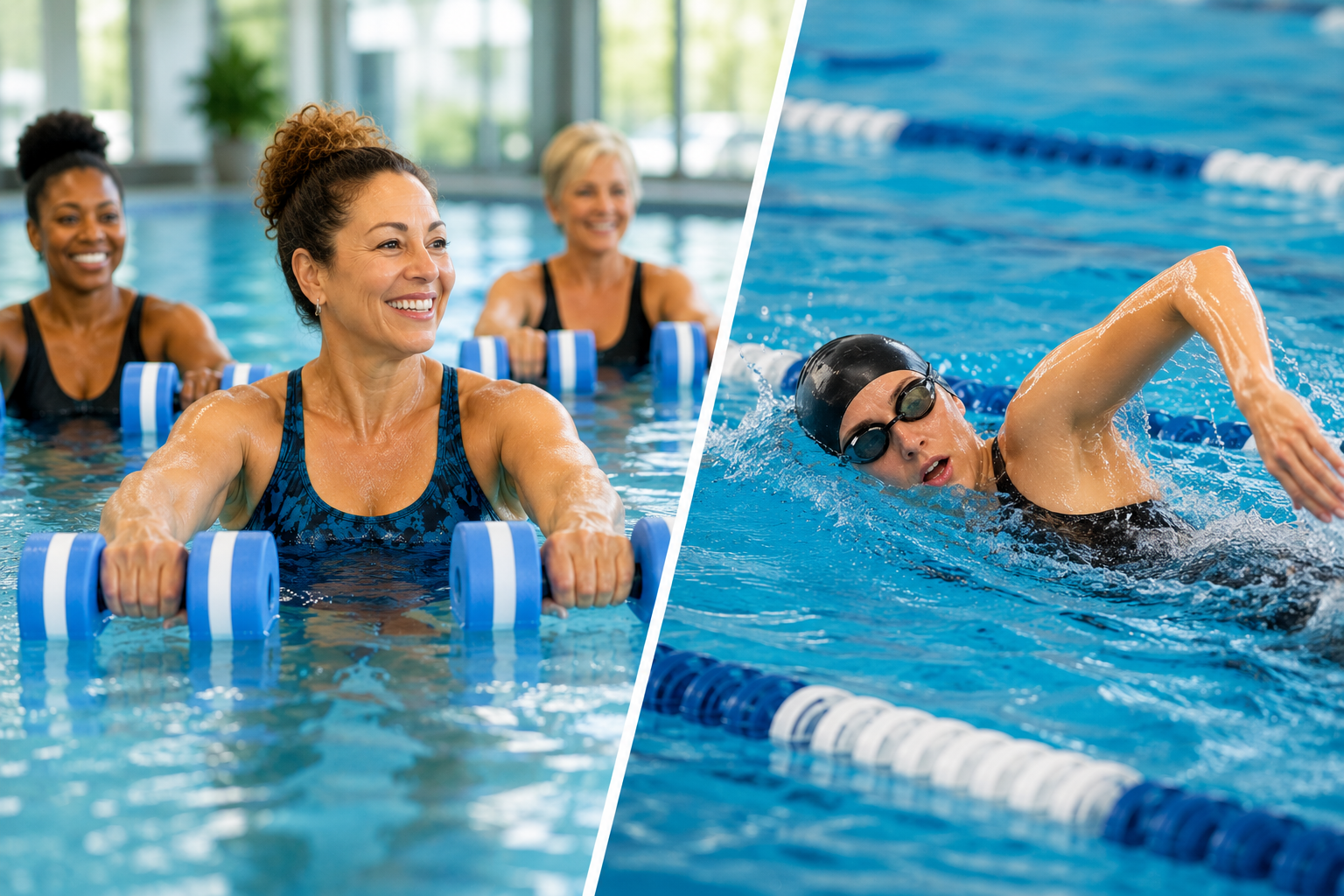
Both water aerobics and swimming provide low-impact workouts, but each offers different benefits.
Water aerobics uses structured movements to improve strength, flexibility, balance, and cardiovascular fitness. Because participants often stand in shallow water, classes are accessible to people who may not feel comfortable swimming laps.
Swimming provides cardiovascular exercise that burns calories and improves endurance. Different strokes engage the upper body, lower body, and core.
For swimming for fat loss, consistent moderate- or vigorous-intensity workouts can be effective. Water aerobics may be easier to maintain long term because it is approachable, social, and gentle on the joints.
Combining both can build endurance, improve strength, and add variety to your routine.
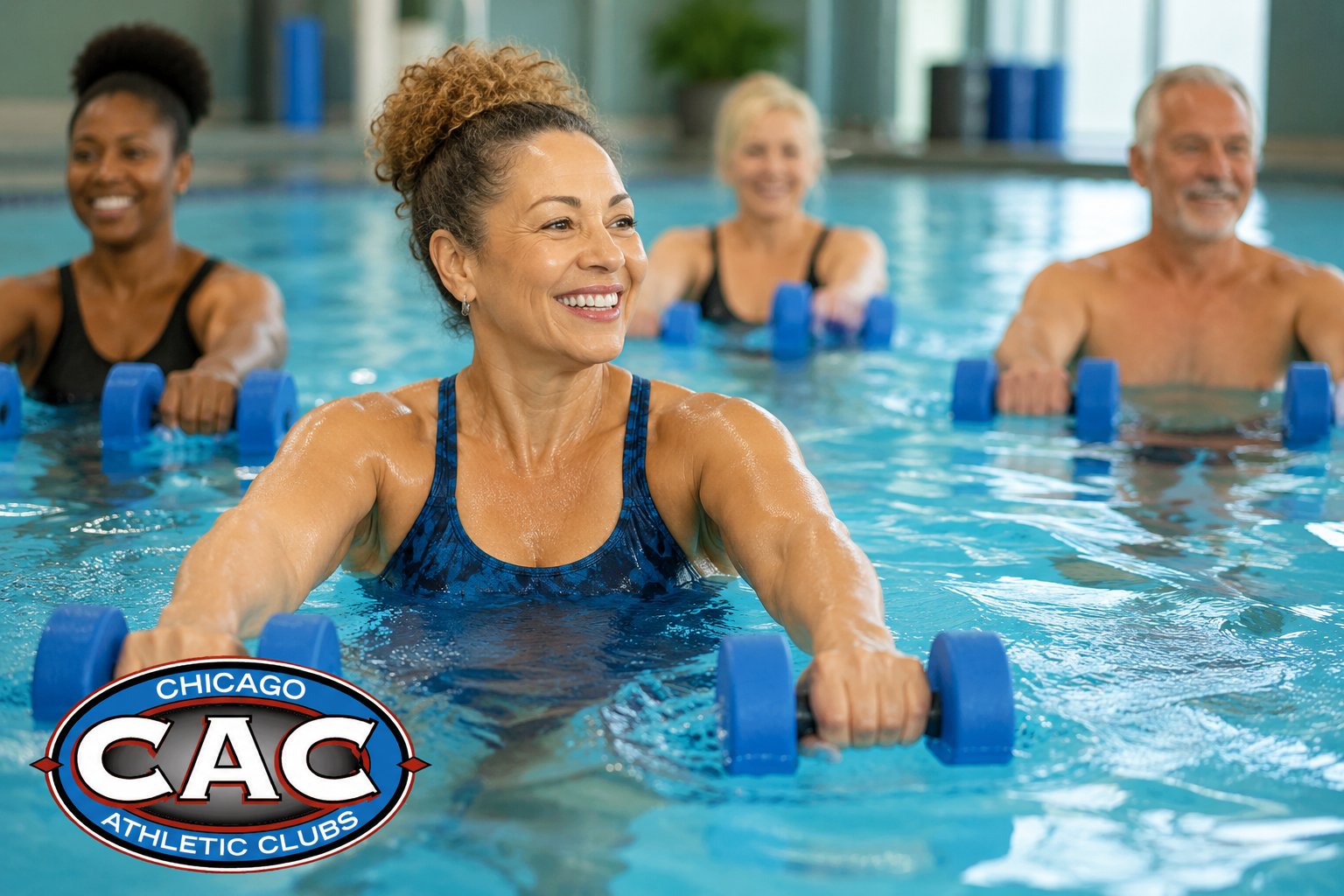
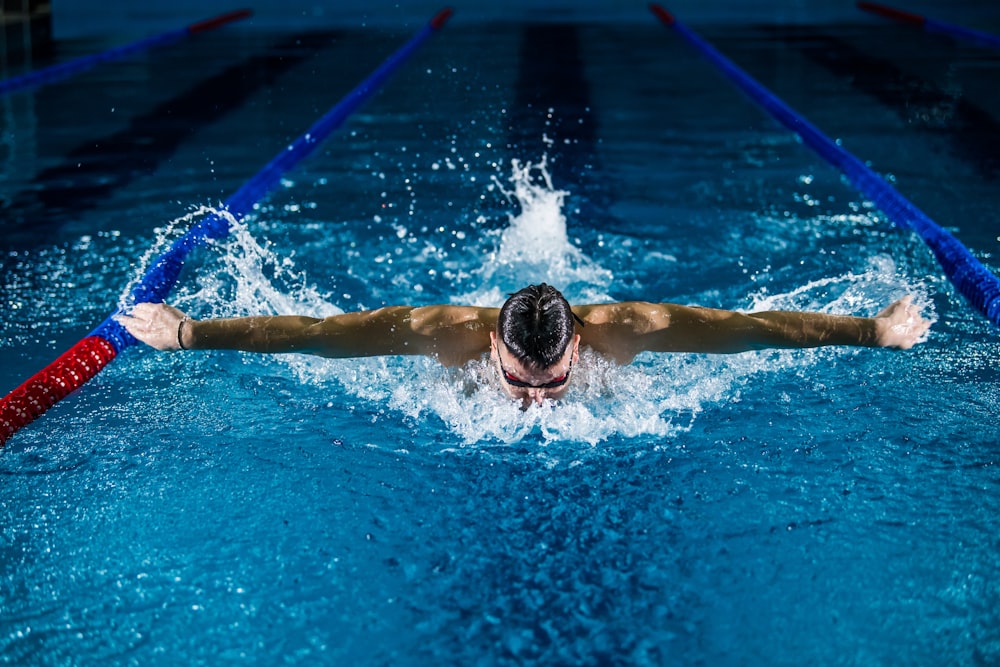
A common question is, can you lose weight by swimming? Yes, but success depends on consistency, nutrition, workout intensity, and overall lifestyle habits.
Swimming burns calories while strengthening muscles and improving cardiovascular fitness. The exact number of calories burned depends on factors such as:
Water aerobics can also support weight loss. Although it may burn fewer calories than vigorous lap swimming, its low-impact nature often makes it easier to exercise consistently.
For the best results, combine aquatic exercise with balanced nutrition, regular physical activity, and realistic expectations. Sustainable weight loss happens gradually, and building healthy habits is more effective than relying on any single workout.
For additional guidance on reaching your fitness goals, learn about personal training at Chicago Athletic Clubs.
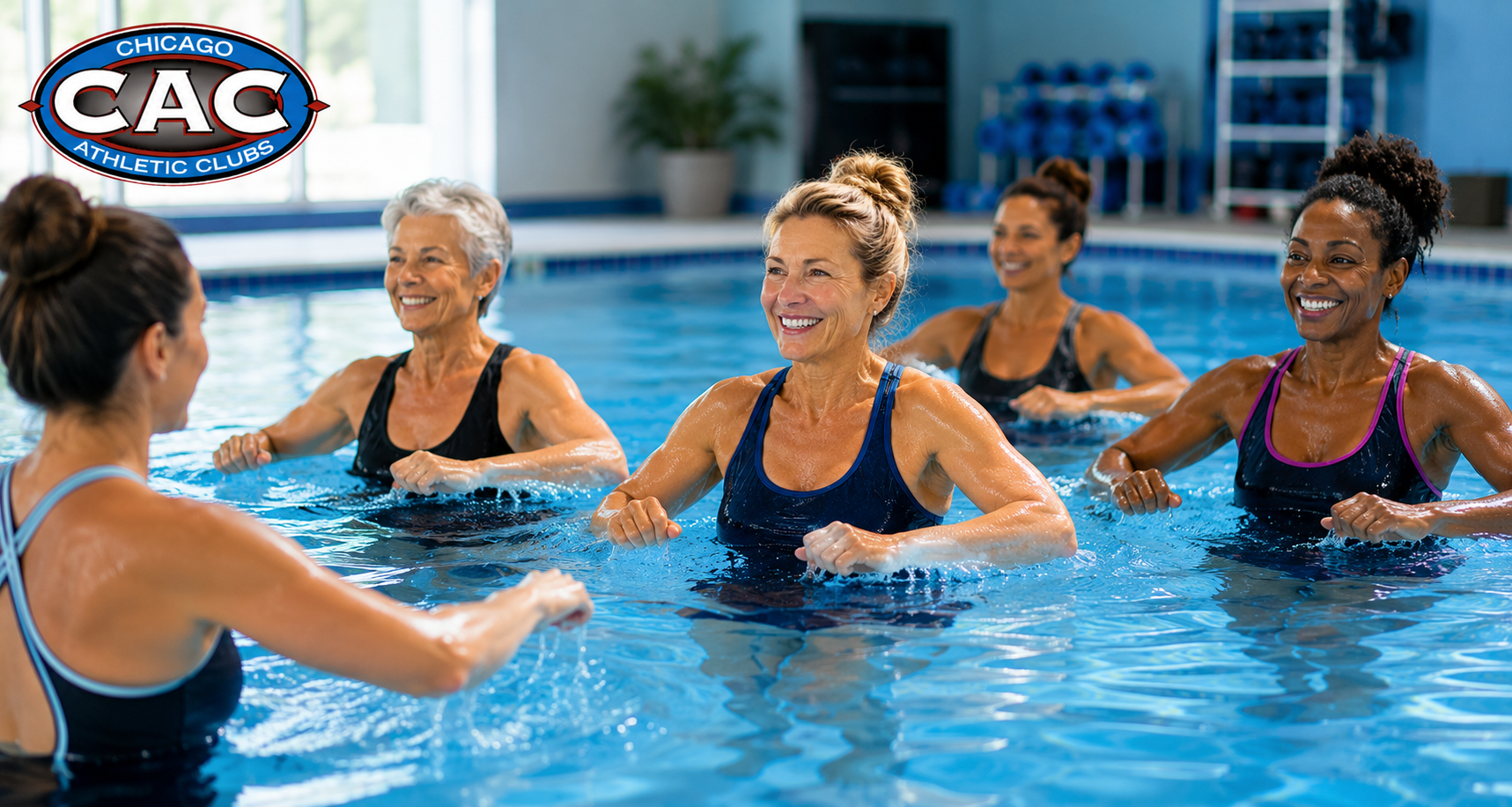
Choosing the right aquatic fitness program starts with identifying your current fitness level, mobility needs, and personal goals.
Beginner-friendly classes provide instruction, support, and manageable workouts that build confidence. More experienced participants may prefer higher-intensity classes that combine cardio intervals with resistance training.
When comparing programs, look for:
A welcoming community and knowledgeable instructors can make it easier to stay motivated and enjoy your workouts over time.
Whether your goal is improving mobility, increasing strength, boosting cardiovascular health, or supporting weight management, aquatic fitness offers an effective way to stay active.
View membership options to explore aquatic fitness classes at Chicago Athletic Clubs and experience a fun, low-impact workout for all fitness levels.
Water walking, jumping jacks, knee lifts, flutter kicks, and arm presses are among the best water aerobics exercises for beginners because they are easy to learn and provide a low-impact, full-body workout.
Most adults can benefit from fitness water aerobics two to four times per week, depending on their fitness level, goals, and overall activity routine.
Both swimming and water aerobics can support weight loss. Swimming may burn more calories during vigorous workouts, while water aerobics offers a lower-impact option that may be easier to perform consistently.
Yes. Swimming can support weight loss when combined with a balanced diet and consistent exercise routine. The number of calories burned depends on workout intensity, duration, and swimming style.
Yes. The buoyancy of water reduces stress on the joints while providing resistance that helps improve strength, flexibility, balance, and cardiovascular fitness.
Not necessarily. Many water aerobics classes take place in shallow water where participants can stand comfortably, making them accessible to people who are not experienced swimmers.