


MAKE A SPLASH
THIS SUMMER

Join Now For $0 Enrollment!
Learn MoreThe dumbbell bench press is one of the most effective upper-body strength exercises, targeting the chest, shoulders, and triceps while making each arm work independently. Whether you're new to weight training or improving your technique, proper form can help you build strength, improve muscle balance, and reduce injury risk.
Because each side stabilizes its own weight, the dumbbell bench press can expose imbalances between your left and right sides. Below, you'll learn proper dumbbell bench press form, common mistakes to avoid, safe ways to progress, and how to include the exercise in a balanced routine.
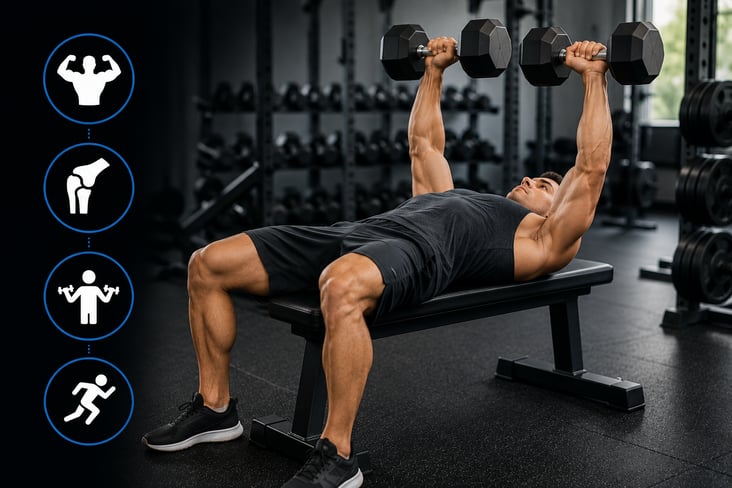
The dumbbell bench press primarily targets the chest muscles, shoulders, and triceps. Because each dumbbell moves independently, the exercise also engages stabilizing muscles throughout the upper body.
Compared with a barbell bench press, dumbbells require greater stability, encourage a wider range of motion, and help identify muscle imbalances. Many lifters also find them more comfortable because the wrists and shoulders can move naturally.
Adding this exercise to your routine can improve:
For personalized strength training guidance, Learn about personal training at Chicago Athletic Clubs.
Good bench press form starts before you lift the weights.
Sit on a flat bench with a dumbbell resting on each thigh. As you lie back, use your thighs to help bring the dumbbells to chest level while keeping your feet firmly planted.
Before beginning the lift:
Keeping your feet flat and maintaining light tension through your glutes creates a stable base, especially when lifting heavier weights.
Learning how to dumbbell bench press safely starts with establishing this foundation before every repetition.
Explore group fitness classes to build strength with proper instruction.
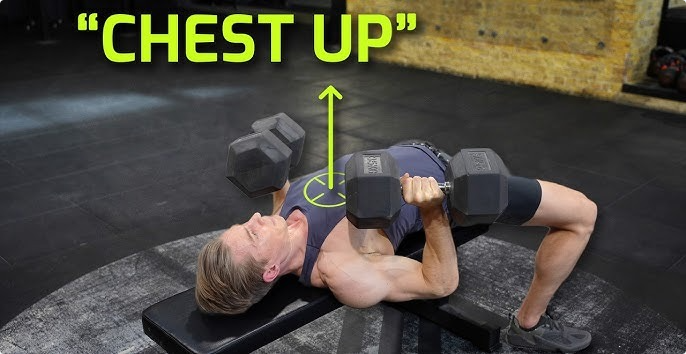
The flat dumbbell press consists of four simple phases.
Start with the dumbbells at chest level, your elbows slightly below your shoulders, and your core engaged. A spotter can help you move heavier dumbbells into the starting position.
Push the dumbbells upward until your arms are nearly straight without locking your elbows. Keep the weights moving in a consistent path above your chest, with your hands stacked over your elbows.
Slowly lower the dumbbells toward your chest while keeping your shoulders stable and your elbows controlled. Do not let the weights drop quickly.
A slow, controlled lowering phase keeps tension on the chest muscles and prevents momentum from taking over.
Exhale as you press and inhale as you lower. A controlled tempo helps maintain proper technique and allows you to move through a full range of motion.
To practice the flat dumbbell press safely, Find a Chicago Athletic Club with the equipment and support you need.
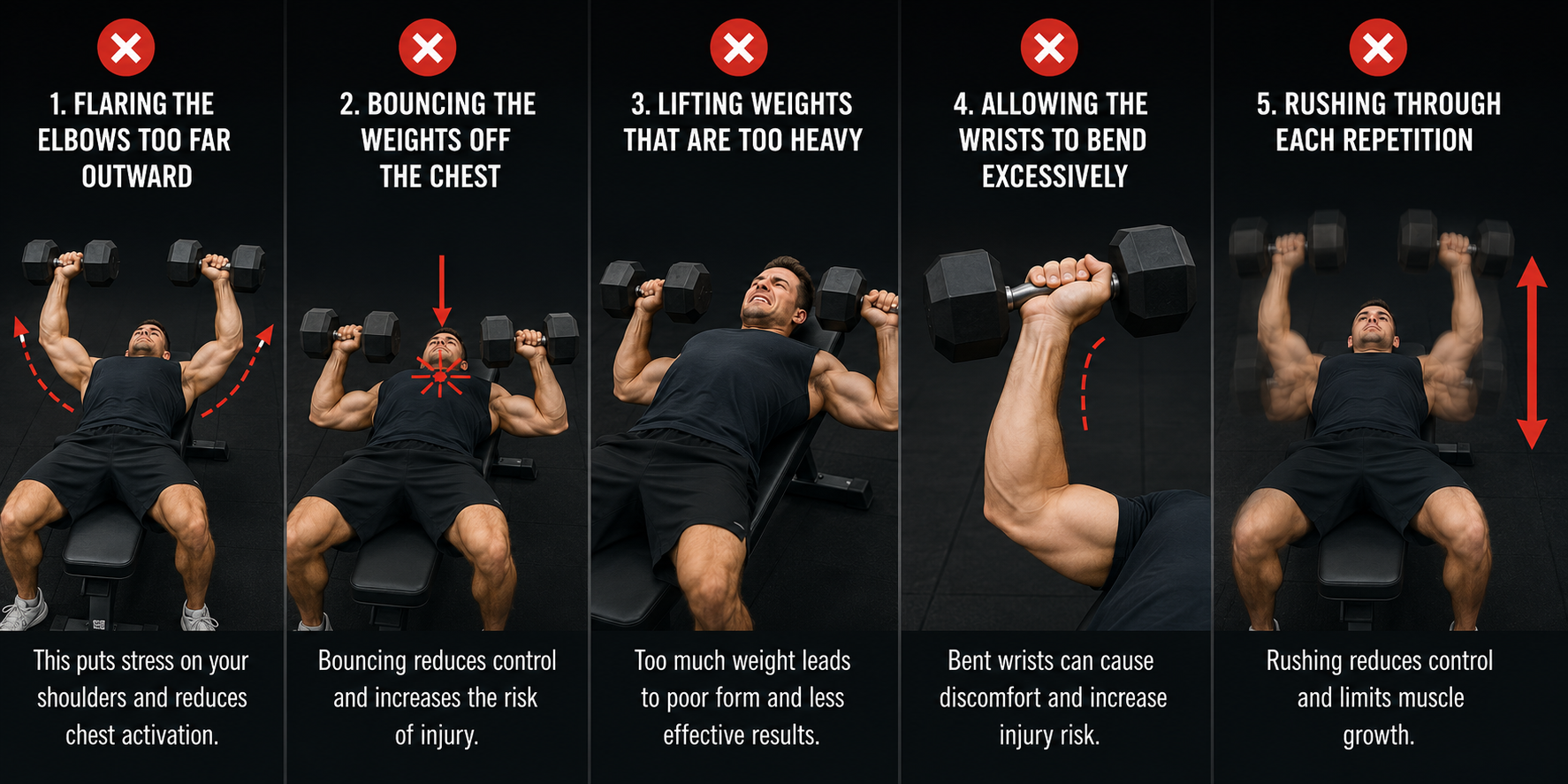
Even experienced lifters can develop habits that reduce the safety and effectiveness of the dumbbell bench press.
Common mistakes include:
Poor bench press form can place unnecessary stress on the shoulders and wrists while limiting muscle engagement.
Focus on controlled movement, proper positioning, and a weight you can manage from start to finish. Dumbbells may also feel more comfortable for some lifters because the hands and shoulders can move more naturally.
As your strength improves, increase the load gradually without sacrificing form.
A few ways to progress include:
Consistent practice and recovery usually produce better long-term results than rushing to lift heavier weights.
To support your progress, View membership options and access equipment, classes, and coaching at Chicago Athletic Clubs.
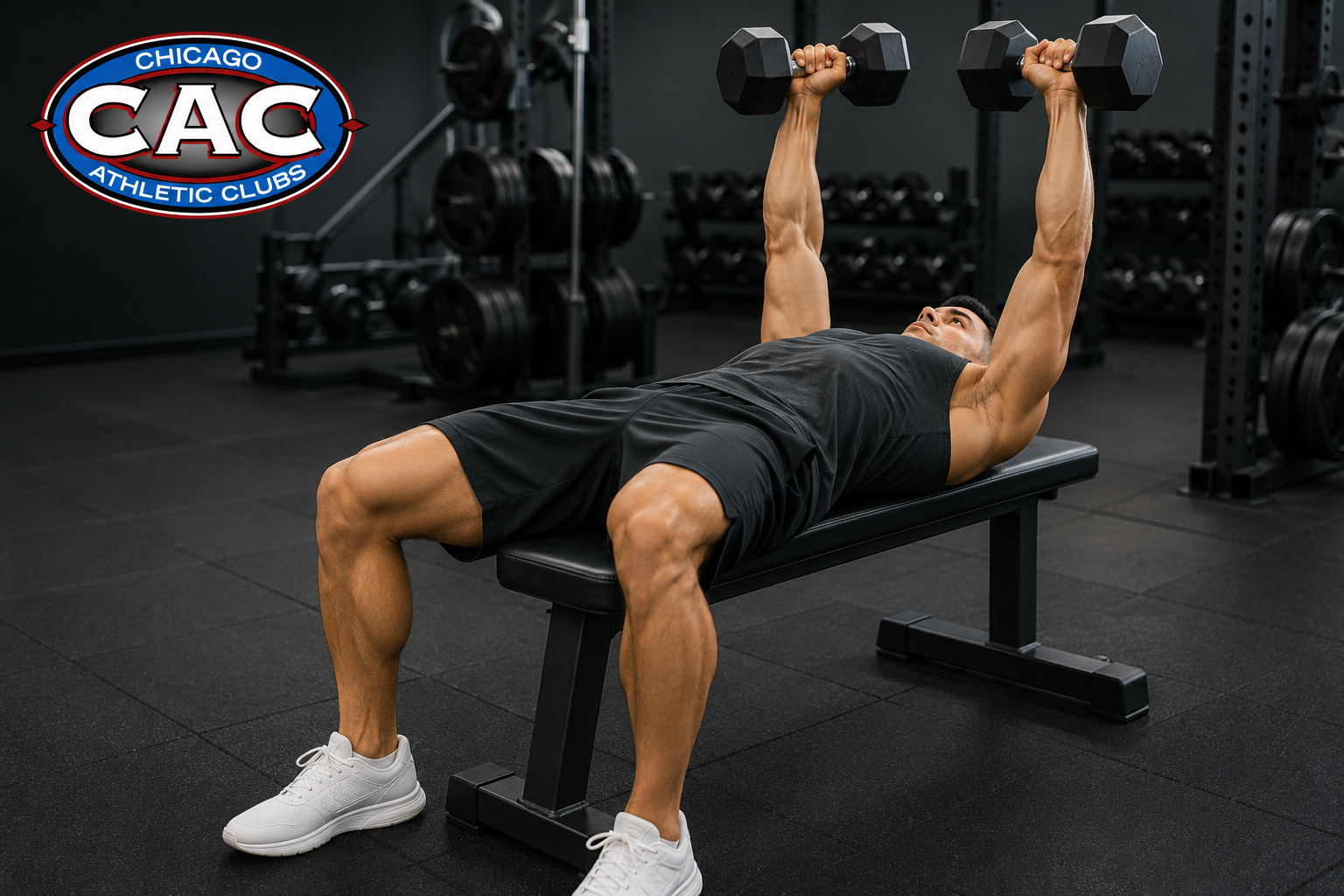
The dumbbell bench press fits well into upper-body and full-body strength programs. Many people perform it one or two times per week for three to four sets, allowing adequate recovery between sessions.
Pair pressing movements with pulling exercises to create a balanced workout. Dumbbell rows, lat pulldowns, seated rows, shoulder presses, and core exercises strengthen complementary muscle groups while supporting posture and stability.
As you continue learning how to dumbbell bench press, focus on consistency, proper technique, and gradual progression rather than lifting the heaviest weight possible.
Barbell pressing may be useful for maximal strength, while dumbbells are effective for building control, stability, and balance. Learn more about Chicago Athletic Clubs and discover resources that can support your fitness journey.
Proper bench press form starts with keeping your feet planted, shoulders retracted, and wrists aligned over your elbows. Start with a manageable weight, lower the dumbbells under control, and press them back to the starting position.
The flat dumbbell press allows a greater range of motion and helps address muscle imbalances, while the barbell bench press often makes it easier to lift heavier weights. The best option depends on your goals.
The dumbbell bench press primarily targets the chest, shoulders, and triceps while engaging stabilizing muscles throughout the upper body.
Maintain a stable base, control the weight through the full range of motion, and avoid excessive arching or elbow flaring. Use a position that keeps your shoulders comfortable and your technique consistent.
Beginners should choose a weight they can control for 8–12 repetitions while maintaining proper technique before increasing resistance.
A spotter is recommended when attempting heavier lifts or training close to muscular fatigue. Extra help can improve safety and confidence, especially when moving dumbbells into or out of position.